Now building · Teacher pilot September 2026
Lerad pulls assignments, submissions, and grades from Google Classroom, PowerSchool, and AP Classroom into one teacher-facing view, so you can answer "who needs help today?" without opening twelve tabs. Built by a working CS teacher, engineered to NY Ed Law §2-d standards from the first line of code.
Synthetic classroom: every student is fictional. No real student data appears in marketing, ever.
Now: building Lerad · teacher pilot September 2026 · latest analysis on AI in K–12 →
The Challenge
A single high-school teacher's data is scattered across a learning management system, a student information system, a College Board portal, and whatever platform each course happens to require. Every system answers a different question, none of them talk to each other, and the teacher becomes the integration layer, exporting spreadsheets on a Sunday to reconstruct a picture the software could have assembled automatically.
The tools that promise to fix this mostly don't. Single-ecosystem dashboards only see their own ecosystem, so they report confidently on a fraction of the picture: missing-work reports that come back empty because the teacher doesn't set due dates, grade averages that contradict the real gradebook because grading happens somewhere else. We know because we ran them against a real classroom and watched them get it wrong.
Meanwhile, the people closest to the data have the least say over it. In Clever's 2025 Classroom of the Future Report, 61% of decision makers said budget drives whether an edtech tool is kept, against 45% who weigh student outcomes, and only 20% factor in whether teachers adopted it at all. Just 21% of educators report having any say in tool selection or the privacy safeguards attached to it, while one in four receives no cybersecurity training for the student data they handle every day. As Mark Racine, former Chief Information Officer of Boston Public Schools, puts it: "Usage data tells you what's being used—but only teachers can tell you why."
Both problems have the same root: student data moving through systems nobody designed to be looked at together, under rules nobody has finished writing. Lerad is our answer to the first. Publishing what we learn is our answer to the second.
How We Think
WorldTree started in K–12 AI governance: frameworks, vendor evaluation, and privacy practice for districts adopting AI. We are now on the other side of that table, building a tool that touches student data. So we hold Lerad to the standard we used to audit other people's software. These are the commitments that come out of it, and the ones we expect you to check.
NY Education Law §2-d governs every third party that touches student data in this state: a written data privacy agreement, a Parents' Bill of Rights supplement, encryption, breach notification. We drafted that pack for Lerad (data inventory, DPA, security plan) before the product had users. It is in review with education-privacy counsel, and we will say plainly that it is a draft until they sign off.
NY Ed Law §2-d · FERPA · Data minimizationLerad asks for the narrowest data it can do its job with, and no more. A dashboard does not need a student's full record to tell a teacher who is behind. Every field we collect has to justify itself against a specific view a teacher actually uses. The ones that can't justify themselves don't get collected, which is also the cheapest breach protection there is.
Least privilege · Purpose limitationA dashboard that renders a confident wrong number is worse than one that renders nothing. If we can't compute a metric honestly, because due dates are missing or grading happened outside the platform, we show you the denominator or we suppress the number and tell you why. Connector health and sync freshness are on screen, not buried in a settings page.
Metric honesty · Connector transparencyInsights
Who We Are
We're not a software company that added an education division. We started in K–12 and built our expertise from there. Most AI governance frameworks were designed for corporate or higher education contexts — we apply an approach grounded in K–12 practice, not adapted from somewhere else.

Sherman brings dual perspective as an active K–12 computer science teacher and PhD candidate in Information Studies. He has worked in classrooms across New York and Texas and understands the implementation realities that district leaders face. He is now building Lerad around his own AP Computer Science classroom — the product is teacher-tested by definition.
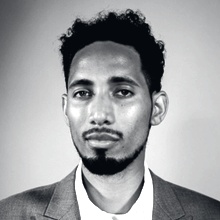
Steven is a Cloud Data Engineer with a background in data science and quantitative research. He translates technical complexity into practical guidance — evaluating AI platforms, assessing data infrastructure, and ensuring districts understand exactly what they're adopting before they sign. As Lerad's architect, he applies that same scrutiny to our own product — least-privilege design, data minimization, no shortcuts.
Get In Touch
Want to pilot Lerad with your teachers? Wrestling with an AI governance question and want a second opinion? Either way, tell us what's on your mind and we'll follow up within two business days.